


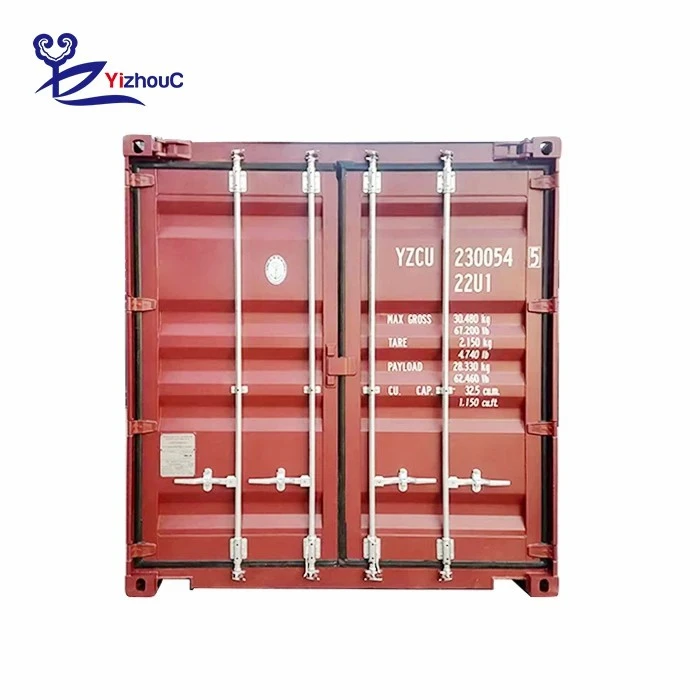
Technical Specifications & Grading Standards
A used 40-foot High Cube (40HC) container provides an extra foot of vertical clearance compared to standard dry vans, making it the industry standard for high-volume logistics and industrial workspace retrofitting. Built with corrugated Corten weathering steel, these units are engineered for intermodal rail, road, and marine transport.
Dimensional & Structural Parameters
|
Parameter |
Metric Specification |
Imperial Specification |
|
External Length |
12,192 mm |
40' 0'' |
|
External Width |
2,438 mm |
8' 0'' |
|
External Height |
2,896 mm |
9' 6'' |
|
Internal Length |
12,032 mm |
39' 5'' |
|
Internal Width |
2,352 mm |
7' 8'' |
|
Internal Height |
2,698 mm |
8' 10'' |
|
Door Opening Width |
2,340 mm |
7' 8'' |
|
Door Opening Height |
2,585 mm |
8' 5'' |
|
Cubic Capacity |
76.4 m3 |
2,694 cu. ft |
|
Max Gross Weight (MGL) |
30,480 kg |
67,200 lbs |
|
Tare Weight |
3,900 kg |
8,598 lbs |
|
Payload Capacity |
26,580 kg |
58,602 lbs |
Material & Construction Details
Structural Framing: Rolled hollow section corner posts and top/bottom side rails fabricated from high-tensile structural steel.
Wall Panels: 2.0 mm thick JIS SPA-H Corten weathering steel with trapezoidal corrugation, resistant to atmospheric corrosion through a stabilized rust patina.
Flooring: 28 mm thick apitong or gurjan marine-grade plywood, secured to crossmembers with countersunk self-tapping floor screws. Treated with insecticides to comply with quarantine standards.
Door Assembly: Four vertical locking cam-keepers, rubber EPDM door gaskets with triple-lip weather sealing, and galvanized steel lock rods.
Product Selection Guide
Selecting the correct condition grade prevents operational failures and regulatory fines. Our inventory is strictly categorized according to IICL (Institute of International Container Lessors) inspection criteria.
Cargo Worthy (CW)
Target Use: International maritime shipping, intermodal rail freight, and certified logistics operations.
Condition Criteria: Retains a valid CSC (Convention for Safe Containers) safety approval plate or recertification capability. Structurally sound frame, minimal roof dents (<= 50 mm depth without tearing), zero light leakage, and doors that seal squarely.
Wind and Water Tight (WWT)
Target Use: Fixed-site industrial storage, tool depots, and agricultural inventory management.
Condition Criteria: The envelope is entirely sealed against moisture and wind intrusion. Floor retains structural load capacity for pallet jacks and forklifts. May exhibit surface rust, previous patch repairs, and minor dents that do not compromise structural integrity. CSC plate is typically expired or absent.
As-Is / Repairable
Target Use: Custom architectural conversions, site offices, generator enclosures, and heavy-duty fabrication projects.
Condition Criteria: Units requiring localized floor timber replacement, corner post straightening, or patch welding on side panels. Sold at liquidation pricing for buyers with dedicated retrofit facilities.
Application Suitability & Engineering Considerations
Intermodal Freight Logistics
Payload Distribution: The high-cube configuration allows maximum volumetric utilization for lightweight, bulky cargo. Ensure floor point loads do not exceed rated capacities when operating heavy warehouse forklifts inside the unit.
Securing Cargo: Internal lashing points (floor lashing rings welded to bottom rails and corner posts rated at 2,000 kg to 4,000 kg pull strength) must be utilized with high-tensile straps or chains.
On-Site Industrial Storage
Foundation Requirements: Units must be leveled on compacted gravel pads, concrete piers, or railroad ties to prevent frame torsion, which causes door misalignment and seal failure.
Ventilation: Standard units lack active ventilation. Condensation accumulation can damage sensitive equipment; installation of louvered vents or turbine ventilators is recommended for static storage applications.
Modular Modifications
Structural Integrity Warning: Cutting openings into Corten steel walls or roof panels for windows, personnel doors, or HVAC units requires welding structural reinforcement frames (such as channel or square tubing) to maintain compressive load paths.
Supplier Evaluation Criteria
When sourcing used shipping containers from international suppliers, B2B procurement teams should evaluate vendors against verifiable operational metrics:
Depot Infrastructure: Does the supplier operate physical container depots with dedicated maintenance and repair (M&R) facilities, or act as an unverified broker? Direct depot access ensures accurate grading and pre-shipment inspections.
Inspection Transparency: Can the supplier provide individual photo/video logs of the exact unit assigned to your purchase order, including close-ups of corner castings, door gaskets, and understructure crossmembers?
CSC Plate Verification: For shipping applications, does the vendor supply valid, unexpired CSC data plates issued by an authorized classification bureau (e.g., ABS, Bureau Veritas, LR)?
Gate-Out Quality Control: Are units cleaned (swept out, residue-free) and verified for leak resistance via light testing prior to release?
Procurement Decision Framework
To streamline purchasing and minimize total cost of ownership (TCO), evaluate your operational parameters against these factors:
Regulatory Compliance: Verify whether your destination country requires strict quarantine clearance (e.g., ISPM 15 compliance for wooden flooring) or valid CSC plating.
Delivery Logistics: 40ft High Cube containers require specialized tilt-bed trailers or side-loaders. Confirm site access parameters:
Minimum clearance length: 100 ft straight clearance for tilt-bed delivery.
Overhead clearance: Minimum 15 ft free of utility lines and tree branches.
Volume Scaling: Spot-market single purchases carry higher per-unit inland freight costs. Volume procurement (full truckloads or block train allocations) optimizes multimodal freight efficiency.
fAQ
Hot Tags: used 40ft high cube shipping container, China used 40ft high cube shipping container suppliers, factory


